The Moment Doesn't Care Who You Are.
Norway beat Brazil. Everyone's calling it an upset. Here's why that framing misses the point.
Welcome to Issue 003 of Decoded. I watched the Norway vs. Brazil game this past Sunday and couldn't stop thinking about what the real story was. Not the one everyone's going to write.
⚡ The main idea
Norway beat Brazil 2-1. Round of 16. World Cup 2026. Five-time world champions, out at the first knockout stage for the first time since 1990. And everywhere I look, the same word: upset.
I want to push back on that. Not on the result - but on the framing. Calling this an upset prevents you from seeing what actually happened.
Here's what I watched. In the first half, Brazil won a penalty. Bruno Guimaraes stepped up, composed and certain. Norway’s Ørjan Nyland dived to his left and pushed it away. Not a lucky guess. He read it completely. Then the match went quiet - Brazil pressing, Norway holding, nothing giving. Until the 79th minute, when Erling Haaland towered above Gabriel Jesus and headed past Brazil’s Alisson. And then, ninety seconds from full time, Haaland again - a low drive from long range that beat Alisson at the near post and found the corner.
Two goals in eleven minutes, sending Brazil out of the 2026 FIFA World Cup.
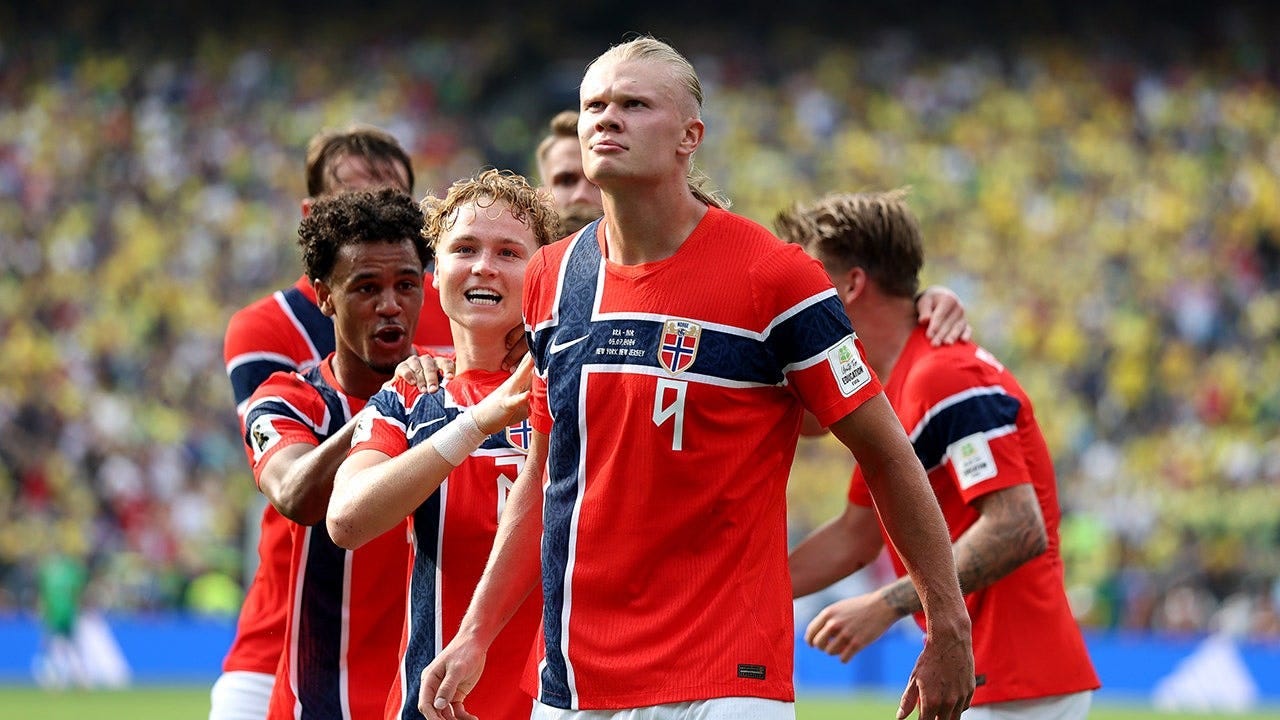
The “upset” narrative flatters everyone involved. It credits Norway with heart-over-talent and lets Brazil exit. Both sides avoid the real question: when the moments arrived, who answered?
Erling Haaland is not an underdog, we know that by now. He has seven goals at this tournament - level in the Golden Boot race with Kylian Mbappé and Lionel Messi. What he produced in those final minutes wasn’t punching above his level. It was a world-class player doing exactly what world-class players are supposed to do when the match needs them. During my professional cricket days, I’ve been in dressing rooms on both sides of the favourite/underdog label, and here’s what I can tell you: nobody on that pitch is thinking about what the bookmakers said. The ball doesn’t know the odds.
Brazil had Vinicius Jr. They had Rodrygo. The talent was there - it almost always is at this level. What the scoreline tells you is simpler: when the decisive moments came, the people who answered them were Norwegian.
The question the moment asks is not interested in your story or who you are. It doesn’t check the rankings. It arrives - a penalty to save, a cross to attack, a gap open for one second - and asks one thing: are you ready?
Haaland was. Nyland was. Some of Brazil’s best players, when it mattered most, weren’t.
That’s not an upset. That’s just what happened.
👁 On my radar
Three things catching my attention that connect to the same idea.
In July 1955, Miles Davis walked onto the stage at the Newport Jazz Festival as someone who had largely dropped off the radar. A heroin addiction had taken him away from the circuit for several years. Nobody expected much. Duke Ellington introduced his band with a wry warmth but not with reverence. Then Davis played “’Round Midnight” - and the performance was so commanding, so completely alive, that it led directly to a contract with Columbia Records and what became the most celebrated decade of his career. He didn’t perform like someone making a comeback. He performed like someone who had simply been waiting to meet that moment. His readiness wasn’t a product of his positioning. It was a product of what was inside.
When Satya Nadella became CEO of Microsoft in 2014, the company was widely seen as a dinosaur. It had missed mobile. It had missed the early cloud wave. Analysts were writing the cultural obituary. Nadella wasn’t the obvious name - he was a quiet internal choice for a company that needed someone loud. In his first email to employees he wrote: “Our industry does not respect tradition - it only respects innovation.” He wasn’t making a declaration about the company’s external position. He was making a statement about the internal question that had just arrived for all of them. Microsoft’s market value went from $300 billion to over $2.5 trillion in the decade that followed. The moment asked if they were ready. He made sure they were.
Viktor Frankl spent time in Auschwitz and observed something that has never left me since I first read it. The question of who would survive psychologically - who would maintain their humanity, their purpose, their ability to choose their response - was not answered by who had been powerful before the war, or educated, or socially connected. The external hierarchy dissolved completely. And Frankl’s conclusion was that the last of the human freedoms is precisely this: the freedom to choose your response to whatever arrives. The moment asked the same question of everyone in those camps. The answers varied. And they had nothing to do with prior position.
↗ The takeaway
Stop asking whether you’re the favourite. It’s the wrong question, and it directs your attention in the wrong direction. Favourites can lose, underdogs can win, and the reverse can also happen. The label tells you what other people expect. It tells you nothing about what’s actually available to you when the moment arrives.
The honest complication is that preparing for your moment requires a kind of deliberate inner work that most people resist, because it’s less satisfying than watching your external position improve. It’s easier to track your ranking than to build your readiness. But rankings are a lagging indicator. They tell you where the work got you. They don’t tell you whether you’re ready for what’s coming next.
One specific thing: identify the moment that’s coming for you in the next thirty days. Not the general direction of your work - the specific instant where you will need to deliver. A conversation, a presentation, a decision. Now ask whether your preparation is actually aimed at that moment, or whether you’ve been doing the comfortable work instead of the necessary work. Haaland doesn’t get those goals at the 79th and 90th minute by accident. He’s been thinking about exactly this kind of moment for a very long time.
🎙 From the pod
Maryna Zanevska reached a career-high of World No. 62 on the WTA tour and competed at the US Open. From the outside, she had the rankings, the results, the credentials. From the inside - as she told me when she came on Decoding Wisdom - it looked very different. She described growing up playing tennis for other people, not herself. She signed a sponsorship contract at eleven. The pressure accumulated for years from the outside in. And eventually, she lost her self-belief entirely.
What happened next is the part I keep coming back to in the context of today’s match. She didn’t just rebuild her ranking. She rebuilt her relationship with the internal question - the one that arrives in every match, every moment under pressure, every time the situation gets tight. She realised that the external structure of her career had been covering for the fact that she hadn’t yet learned to answer that question from the inside. When she finally did, she said it changed everything. Not the talent. Not the training. The inner readiness.
That’s exactly what Nyland was demonstrating when he dived left and saved that penalty for Norway. The moment asked, and he had done the internal work to answer.
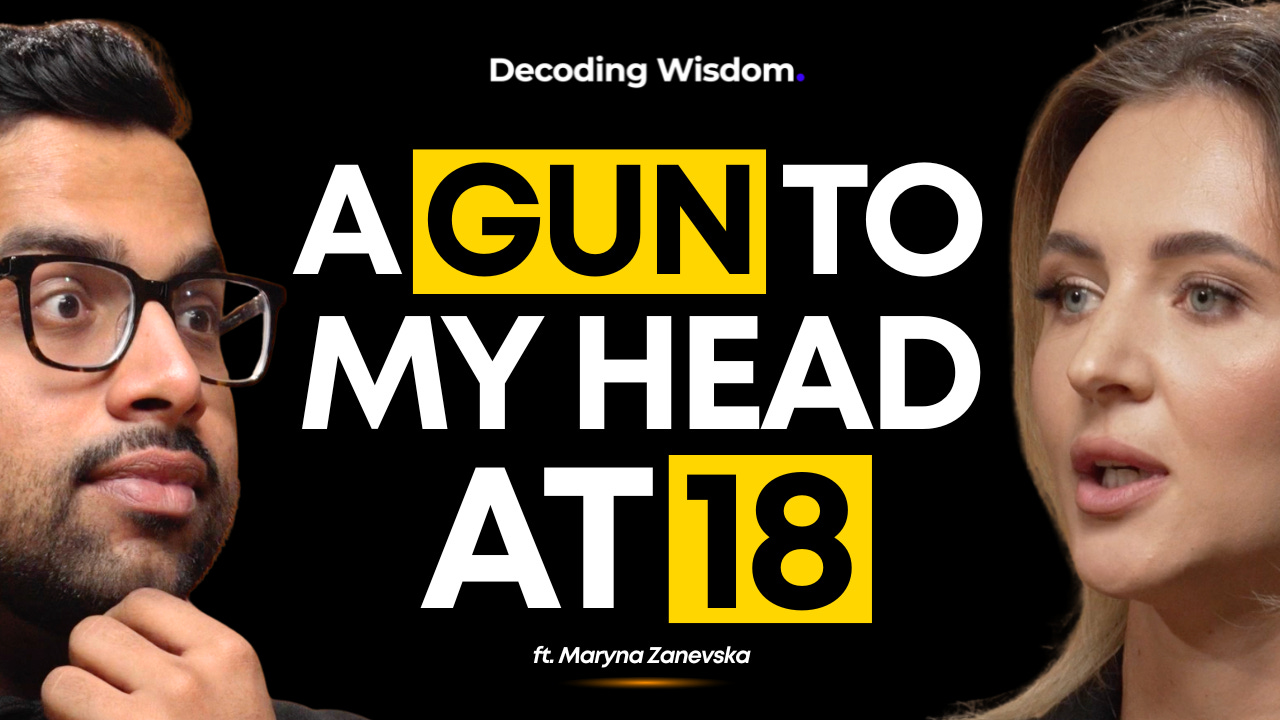
🎧 Watch the full episode here on YouTube
That’s Issue 003 of Decoded. Glad you’re here for it.
If this landed, forward it to one person who needs to hear the Zlatan line. That’s how this grows - one reader at a time.
See you next Tuesday.
Cheers, Sachin.
Like this issue?
Get the next one in your inbox.
That's it for this week. If something here was useful, share it. If it wasn't, let me know - I read every reply.
- Sachin
Share this issue