Some People Just Don't Like Me. That's Okay.
For the first time I've gotten this much hate. It's been wild.
Welcome to Issue 010 of Decoded. Quick update first - the YouTube channel just crossed 1,000 subscribers, and I'm grateful for it. This one's later than usual too - I was genuinely on the fence about whether to publish it at all. Onto a harder few weeks.
⚡ The main idea
For the last month, I’ve been properly hated on for the first time in my life.
Not disagreement. Actual hate - aimed at me, not anything I’d said. Some followed the Conor Daly episode. Some was people deciding I don’t belong covering IndyCar at all. A bit got personal - comments about where I’m from and who I am, not the content.
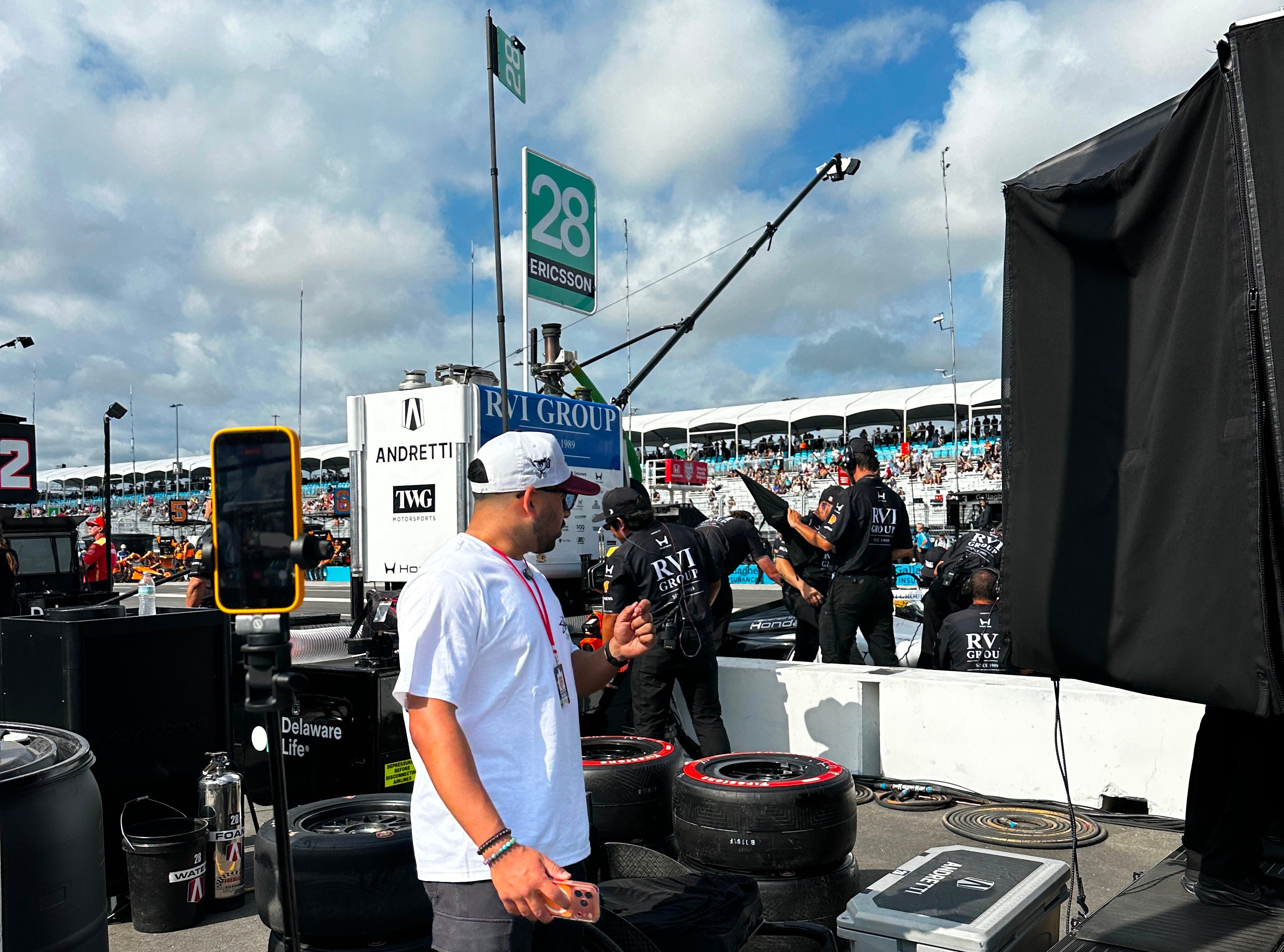
I knew this was coming in the abstract. I didn’t know the volume of it, or how differently it sits in your body versus your head. A few nights I didn’t sleep. Not fear - I just couldn’t switch it off.
Here’s the part I didn’t expect. I run a podcast built on asking people how they handle exactly this. Then it was my turn, and for a few weeks I was worse at taking my own advice than I am at collecting it from a guest.
Giving advice costs nothing - you’re not in it. The moment it becomes the thing you have to do, at 1am, phone in hand, it stops being wisdom and starts being work. Nobody’s exempt. Not my guests. Not me.
👁 On my radar
Three things catching my attention that connect to the same idea.
Simone Biles spent years advocating for mental health over medals. Then the twisties hit at Tokyo 2020, she withdrew, and her first instinct wasn’t the composed message she’d given other athletes - it was raw fear: “America hates me. The world is going to hate me.” The advocate and the person living it were briefly two different people.
Brené Brown built her career telling people to lean into vulnerability. When her first TED talk went viral, she’s said she woke up with “the worst vulnerability hangover of my life” and didn’t leave her house for three days. The expert on shame, undone by the exact thing she studies.
There’s a concept called the hot-cold empathy gap - people in a calm state reliably underestimate how they’ll act under real pressure. It’s why advice from a safe distance rarely survives contact with the moment it was meant for.
↗ The takeaway
The advice you give other people is real. It’s just built from a safe distance - and that version of you has never had to stand where the other person is standing.
I won’t wrap the last few weeks in a bow. Some nights I handled it the way I’d tell a guest to. Other nights I didn’t. Next time you’re handing out advice on pressure or criticism, ask yourself honestly if you’ve actually lived it recently, or if you’re repeating something true you haven’t had to use in a while. Both are fine. Just know which one you’re doing.
🎙 From the pod
This week’s pick is the Conor Daly episode - tangled up in the last month for me anyway, and a better answer to this idea than anything I could write.
Years ago, days before a race, Conor lost a sponsorship over something entirely outside his control. His response wasn’t polished. It was a tweet: “There is a lot I want to say. But I’m still here and still racing.” That’s someone living the exact thing my guests spend fifty episodes telling me to do.
🎧 Watch the full episode here on YouTube
That’s Issue 010 of Decoded. Glad you’re here for it.
If this landed, forward it to one person who needs to hear it. That’s how this grows - one reader at a time.
See you next Tuesday.
Cheers, Sachin.
Like this issue?
Get the next one in your inbox.
That's it for this week. If something here was useful, share it. If it wasn't, let me know - I read every reply.
- Sachin
Share this issue