Next Game...
Jude Bellingham said two words after beating Norway. I haven't stopped thinking about them since.
Welcome to Issue 004 of Decoded. Yes, three football issues in a row. I'll own that. But what's happening at this World Cup keeps surfacing ideas I can't ignore - and this week more than any other. Also - it's Monday. Decoded usually lands on Tuesdays, but I'm running some back-end tests on the website and Substack this week, so the timing shifted a day. The newsletter is fine. The technology is... mostly fine.
⚡ The main idea
England are two wins from the World Cup. I support England. I’ve watched every minute. And after they beat Norway on Saturday, the Fox interviewer got Jude Bellingham on camera and asked him something along the lines of - you’re two wins from winning the whole thing, how does that feel?
He didn’t bite. He just said - I’m not thinking about that. Next game. That’s all. Game by game. We don’t think that far ahead.
That was it. Two words that said everything.
I’ve been sitting with it ever since because what Bellingham did in that moment is one of the hardest things in high performance - and he made it look like nothing. He’s 23 years old, his country is singing his name, he’s six goals into a tournament where history is genuinely within reach. And when handed the perfect opportunity to talk about the final, the trophy, the legacy - he just... didn’t go there.
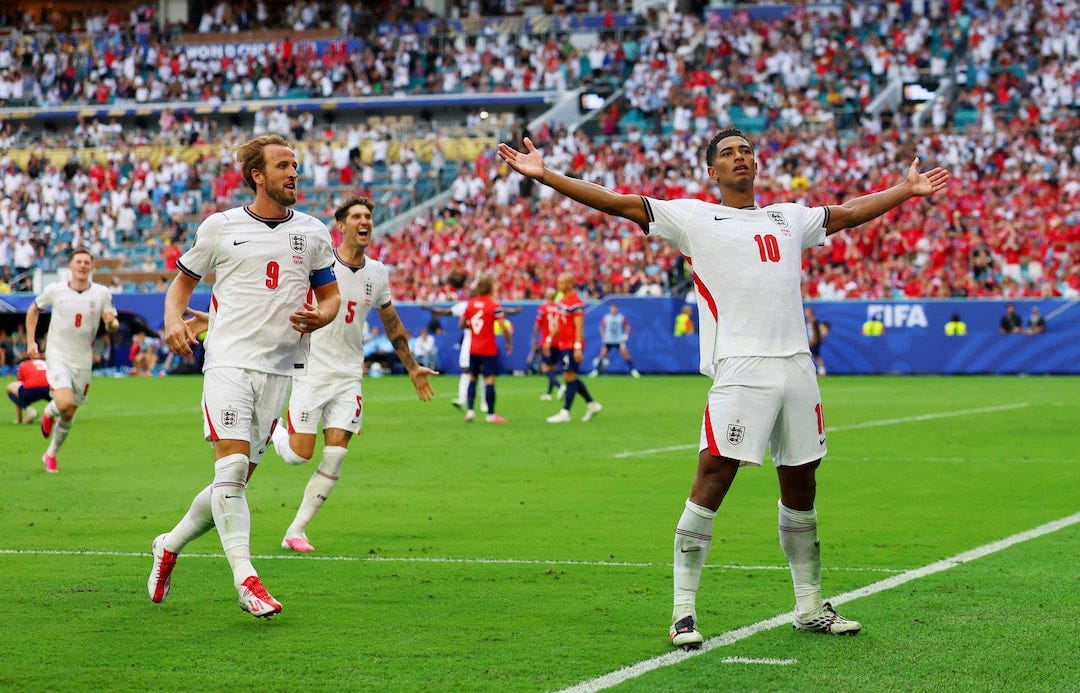
Here’s what I think people miss about that answer. It’s not humility. It’s not media training. It’s one of the most sophisticated performance disciplines that exists - the ability to hold a massive vision while refusing to act on anything except what’s directly in front of you. The danger at this stage of any big pursuit isn’t a lack of desire. It’s being consumed by the size of what’s possible. The person who keeps staring at the summit stops watching their footing.
When I left corporate, everyone’s first question was about the end point. What’s the plan? What does it look like in five years? I learned quickly that wasn’t the right question. The question was simpler - what’s the next right thing to do today? Bellingham, at 23, in a World Cup semifinal week, already knows this. And it’s why he keeps showing up in the moments that matter.
Next game. That’s the whole philosophy.
👁 On my radar
Three things from completely different worlds that connect to the same idea.
Nick Saban built one of the greatest dynasties in American college football history on a philosophy he simply called ‘The Process’. He reportedly banned his players from talking about winning championships. Not because he didn’t want to win - he wanted nothing else - but because he understood that the fastest way to lose is to start playing for the outcome instead of the moment. His teams won because they stopped thinking about winning. That sounds like a paradox. It isn’t.
Warren Buffett has said he doesn't know what markets will do next year and doesn't particularly care. He reads one company's report, evaluates the business in front of him, makes one decision, then moves to the next one. The compounding that built one of the great fortunes in history wasn't built by thinking about compounding - it was built by getting each individual decision right and then focusing on the next one. Next game thinking applied to capital allocation.
There's a concept in psychology called Attentional Narrowing - the idea that under pressure, high performers instinctively shrink their focus to only what they can control in the immediate moment. The people who fall apart under pressure aren't the ones who care too much - they're the ones whose attention drifts to outcomes they can't control yet. Bellingham's "next game" isn't him switching off. It's him switching all the way on.
↗ The takeaway
The instinct when the stakes get high is to zoom out - to think about what winning or losing will mean, what it will say about you, how it will change things. That instinct is understandable and it’s almost always the wrong move. The bigger the moment, the more it demands that you zoom in.
The honest complication is that this only works if you genuinely trust that doing the next thing well is actually the path to what you want. It has to be real - not performed. You can see it in how Bellingham plays. He’s not pretending not to care about the final. He just knows the final doesn’t exist yet.
One question worth sitting with this week - what are you currently looking at that’s too far away? Find it. Name the next game. Then go play it.
🎙 From the pod
Daniel Resnick is a Deals Advisory Partner at KPMG Canada. He has beaten cancer twice. When he came on Decoding Wisdom, the thing that stayed with me longest wasn’t how he described the fight - it was how he described the only way through it. You cannot think too far ahead when you’re in treatment. The body won’t let you. What you can do is focus on what’s directly in front of you - the next appointment, the next week, the next result. He described finding a kind of freedom in that constraint.
That’s next game thinking at its most human. Not a performance strategy - a survival mechanism that turns out to also be the highest performance approach available. Bellingham is choosing to apply it. Daniel had no choice. Both arrived at the same place.
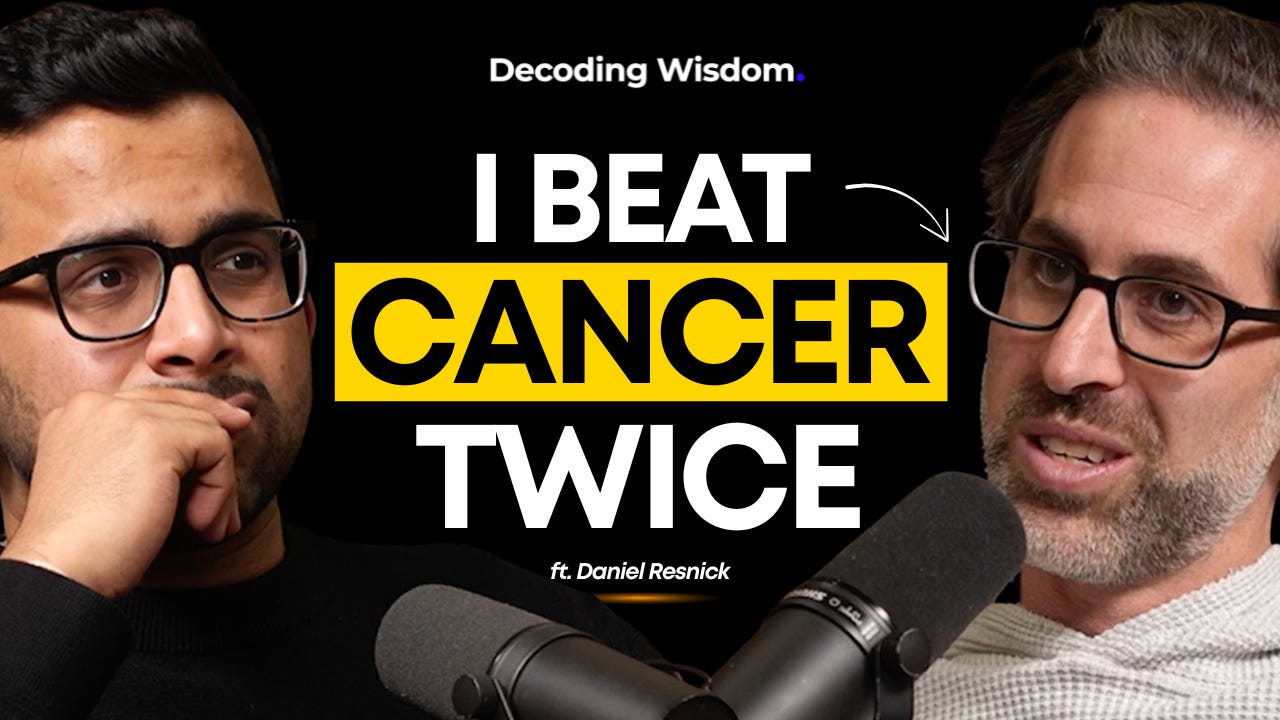
🎧 Watch the full episode here on YouTube
That’s Issue 004 of Decoded. Glad you’re here for it.
If this one landed, forward it to one person who needs to zoom in right now. That’s how this grows - one reader at a time.
See you next Tuesday.
Cheers, Sachin.
Like this issue?
Get the next one in your inbox.
That's it for this week. If something here was useful, share it. If it wasn't, let me know - I read every reply.
- Sachin
Share this issue