Don't Go To Europe.
Conor Daly said it. Then he took it back. Here's why both were true.
Welcome to Issue 006 of Decoded. I sat down with IndyCar driver Conor Daly this week on Decoding Wisdom, and one exchange near the end of the conversation hasn't left me since we stopped recording.
⚡ The main idea
I moved to England alone at sixteen to chase professional cricket. No parents, no support system nearby, just a scholarship and a plan. So when Conor Daly told me his story, I understood part of it before he’d even finished the sentence.
Conor moved to Europe alone as a teenager too - chasing Formula 1, the family business. His dad Derek Daly raced in F1 and IndyCar. His stepfather Doug Boles now runs IndyCar itself. But nobody handed Conor anything. He earned his way through GP3 and GP2 on his own results - podiums, a Force India Formula 1 development contract, three years of visible progress against drivers like Carlos Sainz and Valtteri Bottas.
Then it ended in about six weeks.
He got wrecked at Monza in a title-deciding race. His Force India deal was contingent on winning that title. The next rung up needed roughly $1 million he didn’t have. No crash in form, no loss of talent - just money that wasn’t there the moment it mattered most. The F1 dream he’d built his entire adolescence around closed within a month.
Near the end of our conversation, I asked him the question I ask every guest - flipped. What would his older 80 year old self tell him now, at 34?
“Don’t go to Europe. It’s not worth it.”
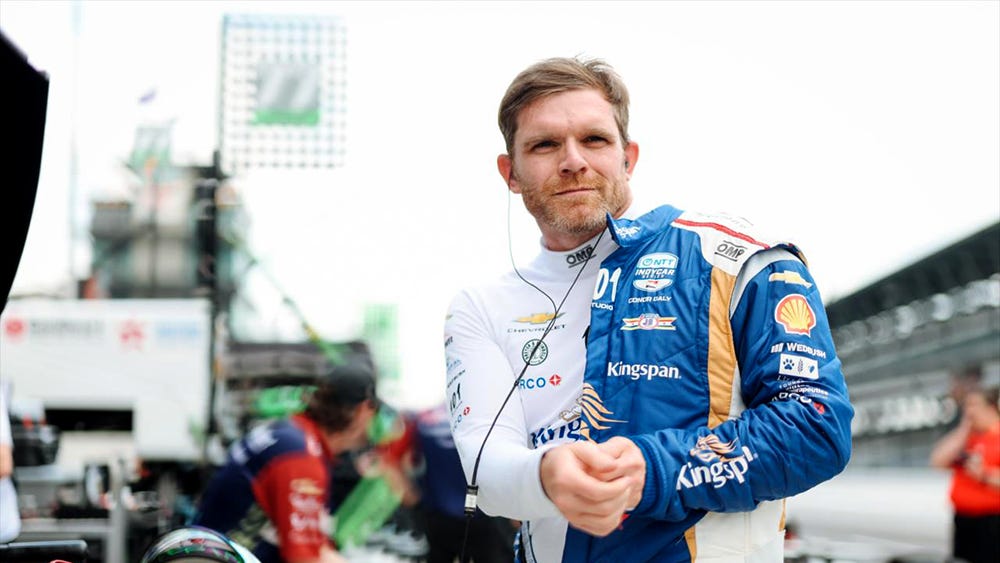
Then, almost in the same breath, he pulled it back. Said he was proud of what he built over there. Said he still wonders, a decade on, what would have happened if he’d never made that call at all.
Both things are true for him. At the same time.
👁 On my radar
Three things catching my attention:
Andre Agassi opens his memoir Open with a line that still stuns people who only know him as one of the greatest tennis players ever: “I hate tennis, hate it with a dark and secret passion, and I have hated it for years.” Eight Grand Slams. A Hall of Fame career. He never resolved that tension — he just kept playing at the highest level with the doubt sitting right next to the achievement.
In 1995, psychologists Victoria Medvec, Scott Madey, and Thomas Gilovich studying Olympic medalists found something counterintuitive: bronze medalists were consistently happier than silver medalists. Silver medalists compared themselves to the gold they’d just missed. Bronze medalists compared themselves to not medaling at all. Conor missed the GP3 title by a margin narrow enough that he can still picture the version where he didn’t.
Phil Knight wrote Shoe Dog nearly fifty years after founding what became Nike, and the honest surprise of that book is how little peace he’d made with the risk even in hindsight - years of insomnia, near-bankruptcy, a running mental tally of whether the whole venture was a mistake. Success didn’t retroactively make the bet feel safe. It just meant he got to keep making it.
↗ The takeaway
The framework I use for big decisions is the one Jeff Bezos popularised - project yourself ten years forward and ask which choice you’ll regret more. I leaned on it hard to leave corporate for time being. But Conor’s answer complicated something I’d quietly assumed the framework guaranteed: closure.
It doesn’t. Taking the leap doesn’t mean the doubt disappears once the results come in. It means you get to keep building something real while the doubt sits quietly in the background, unresolved, maybe permanently. Conor built an entire second career in IndyCar after Europe ended. He’s still not fully sure the first one was worth what it cost him.
That’s not a reason to avoid the leap. The version of you who never tried is the one guaranteed the cleanest, saddest form of regret. But it’s worth dropping the expectation that a big bet, even a successful one, resolves itself neatly in your head.
This week: think of the biggest bet you’ve made. Not whether it worked. Whether you’ve made peace with it. If the honest answer is no, that’s not a failure of the decision. That’s just what a real bet feels like, years later, from the inside.
🎙 From the pod
This entire issue comes from one conversation - my sit-down with Conor Daly on Decoding Wisdom this week. What doesn’t fit into an essay is everything else he was generous enough to talk through: what it actually felt like sitting in a Force India F1 car for the first time, the exact mechanics of being replaced by a team despite outperforming his own teammate every weekend, and why he still calls himself “cautiously optimistic” about landing a full-time IndyCar seat in 2027 - at 34, in what he insists is the prime of his career rather than the tail end of it.
He’s candid in a way most drivers at his level aren’t allowed to be, and he knows it costs him sometimes. I think that’s exactly why the conversation is worth your time.
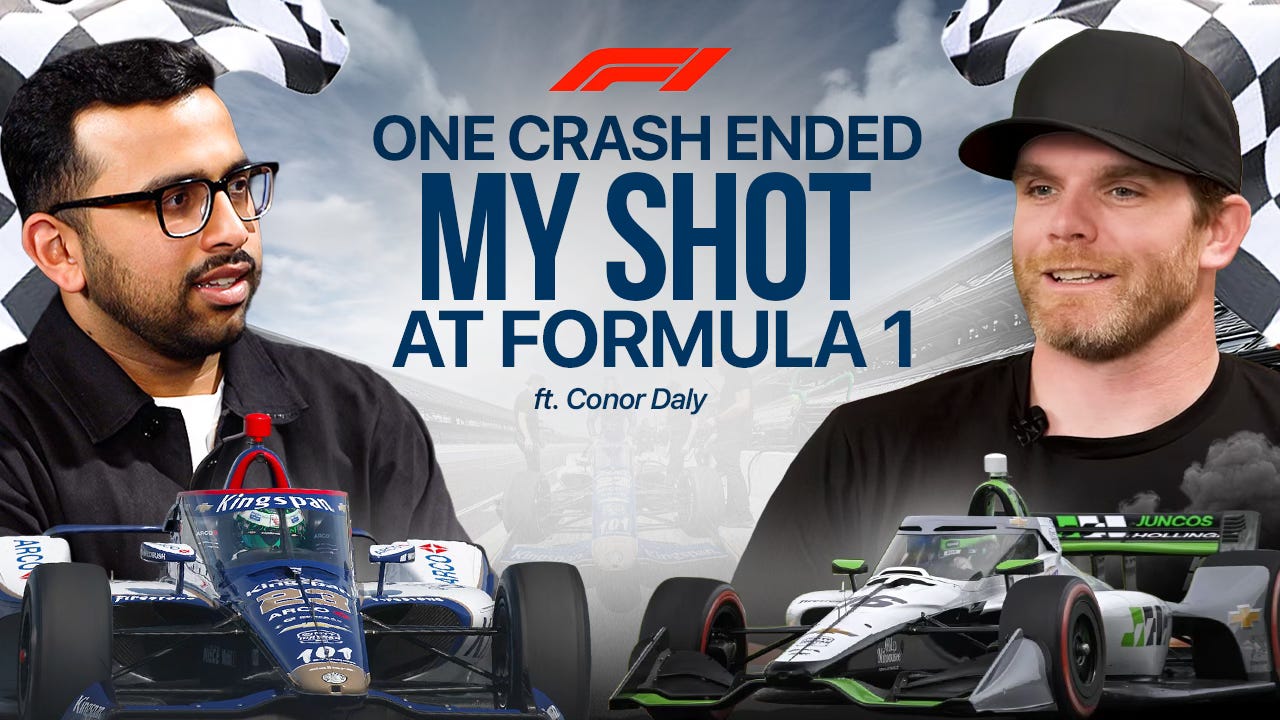
🎧 Watch the full episode here on YouTube
That’s Issue 006 of Decoded. Glad you’re here for it.
If this landed, forward it to one person who needs to hear it. That’s how this grows - one reader at a time.
See you next Tuesday.
Cheers, Sachin.
Like this issue?
Get the next one in your inbox.
That's it for this week. If something here was useful, share it. If it wasn't, let me know - I read every reply.
- Sachin
Share this issue